AI, software, and automation consulting for Canadian manufacturers.
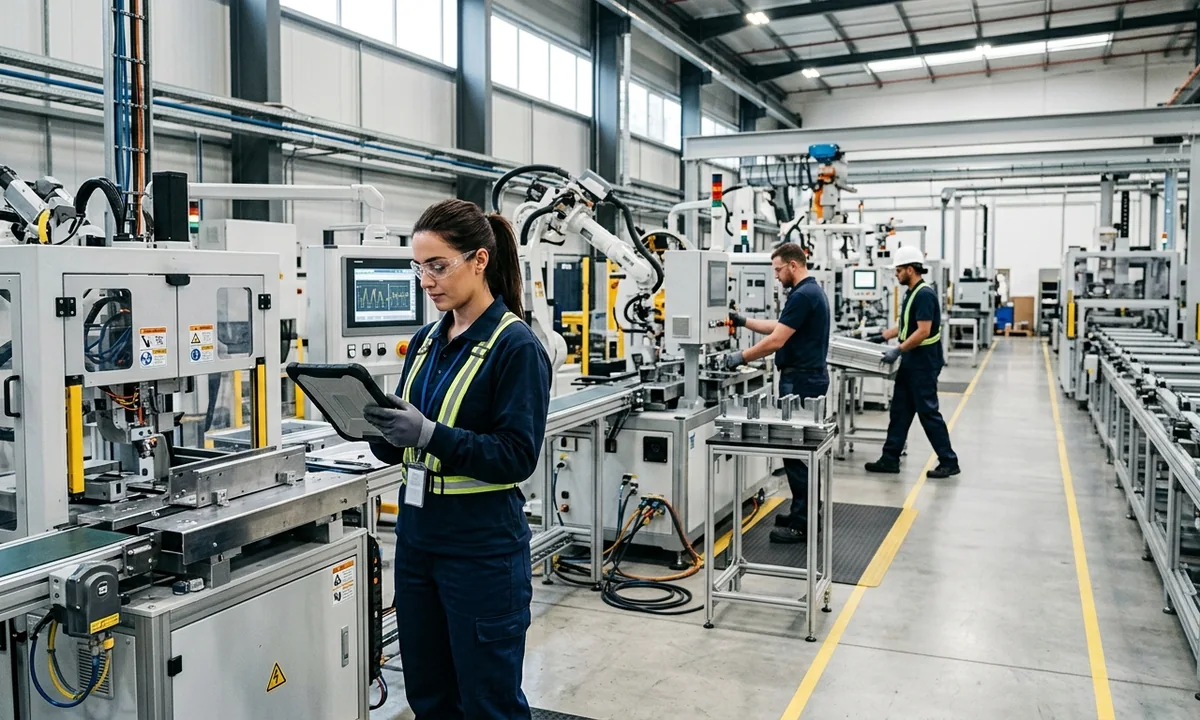
Manufacturing teams need cleaner handoffs, better visibility, faster reporting, and focused pilots that improve the way production, quality, maintenance, and operations teams actually work — backed by people who have deployed technology on real shop floors.
Most plants already sit on the raw material for better decisions: production logs, quality records, maintenance histories, downtime notes, and ERP data. The problem is rarely a lack of data — it is that the data is trapped in spreadsheets, whiteboards, and people's heads, and it takes too long to turn into a decision. The result is slow shift reporting, repeated quality issues, reactive maintenance, and supervisors who spend their day chasing information instead of running the line.
AICG helps manufacturers close that gap with applied intelligence: practical automations and tools that summarize, route, and report, paired with the software integration and rollout experience to make them stick in a 24/7 environment. We have supported operations at large industrial and logistics organizations, and we bring that standard of execution to plants of every size.
Use cases
Where applied intelligence can help.
Production & shift-report automation — turn end-of-shift notes and logs into clear, consistent summaries.
Quality inspection triage — group defects, surface recurring causes, and draft exception summaries.
Maintenance & asset history — analyze breakdown patterns and support planned, not reactive, maintenance.
Operator copilots — fast answers from SOPs, troubleshooting guides, and training material.
Operational dashboards — energy, scrap, downtime, and throughput visibility leaders can trust.
Sales-ops automation — quoting, catalog, and order-handling workflows that reduce re-keying.
Funding programs to watch
Funding-aware project framing.
Ontario Advanced Manufacturing and Innovation Competitiveness Stream
Ontario regional development and productivity streams
NGen advanced manufacturing programs
NRCan industrial energy efficiency and green manufacturing programs
Ontario emissions and energy-efficiency programs
Program names are directional research signals, not eligibility advice or approval guarantees.
What a first engagement looks like.
We start on the floor, not in a slide deck. In a short discovery, we map one high-friction workflow — say, quality exceptions or shift reporting — and quantify what it costs today in hours, rework, and delay. From there we design a controlled pilot with a human in the loop, integrate it with the systems you already run, and measure the before-and-after.
Because our team has handled enterprise software integration and multi-site technology rollouts, we plan for the realities a plant lives with: shift coverage, network constraints, training, and support. The goal is a working improvement your team owns — not a proof of concept that dies after the demo.
How AICG helps
Turn ambition into a scoped, measurable pilot.
Select AI pilots tied to measurable productivity or quality outcomes
Prepare data and operational routines before buying software or systems
Create funding-ready scopes, milestones, and ROI logic where applicable
Build lightweight automations that reduce repetitive administration
Manufacturing AI: common questions.
How should a Canadian manufacturer start with AI?
Start with one repetitive, measurable workflow — a shift report, a quality exception log, a maintenance write-up — where you can compare time, accuracy, and cost before and after a focused pilot. We help you pick the workflow with the clearest payback first.
Do we need clean data or new software before we begin?
Not necessarily. We run a short data and systems readiness check on the specific workflow before recommending any software or systems spend, so you do not buy a platform to fix a process problem.
Can AICG help frame a project for funding programs?
Yes. We translate operational goals into fundable scopes, milestones, and ROI logic. Program names we mention are directional research signals, not eligibility advice or approval guarantees.
How quickly do manufacturers see results?
A scoped pilot typically follows a 30/60/90-day path: map and baseline the workflow, build a controlled pilot with human review, then measure savings and decide what to scale.
Start with one workflow on the floor.
The strongest plant pilots begin with a single repetitive workflow — a shift report, a quality exception log, a maintenance write-up — where the team can compare hours, rework, and downtime before and after.